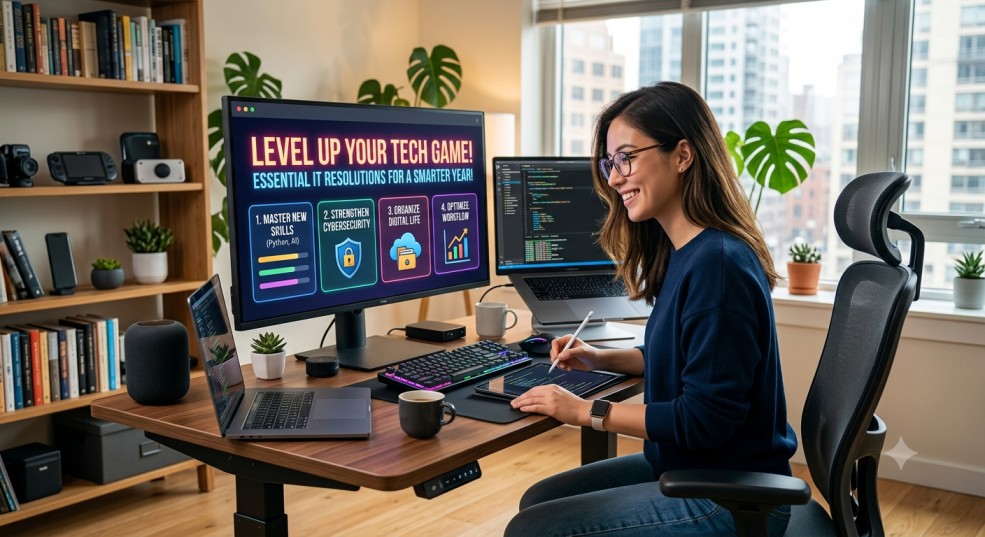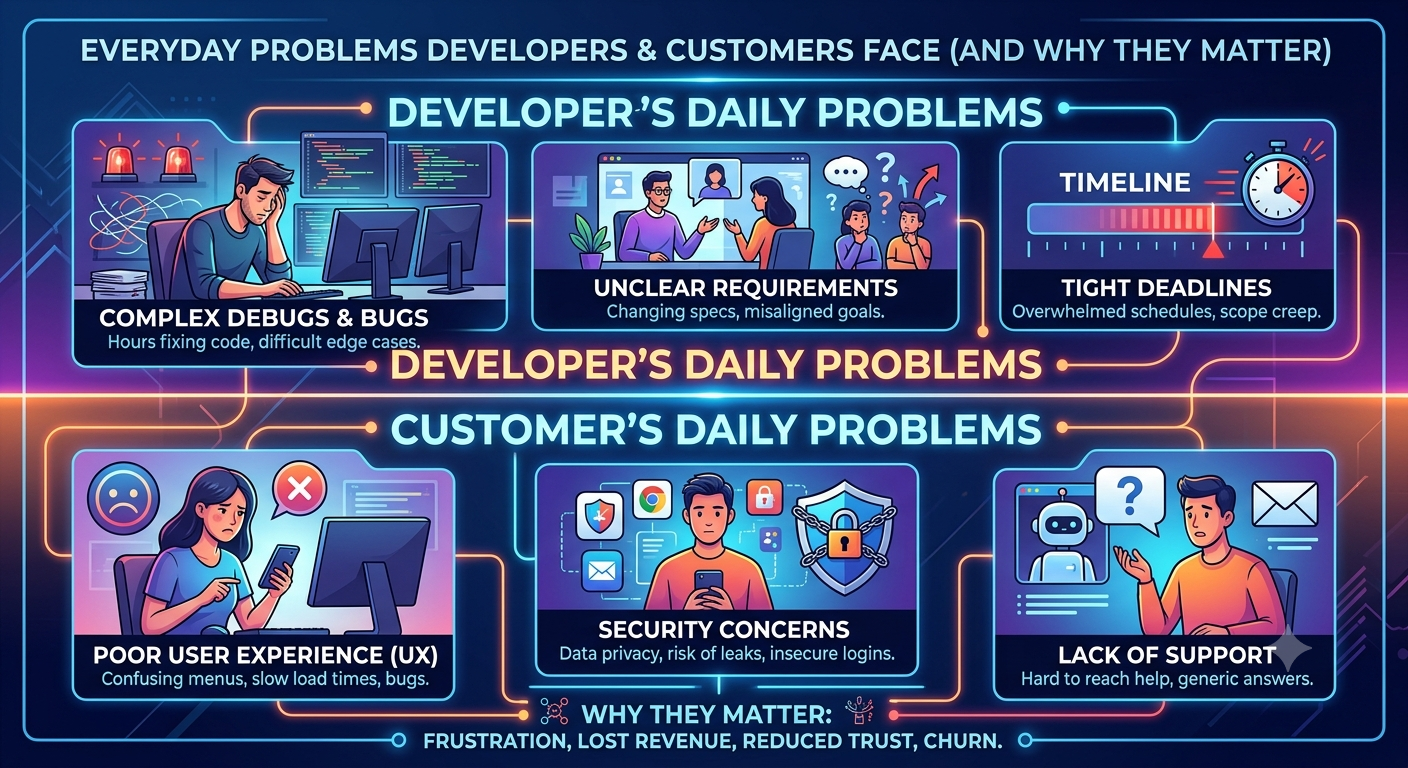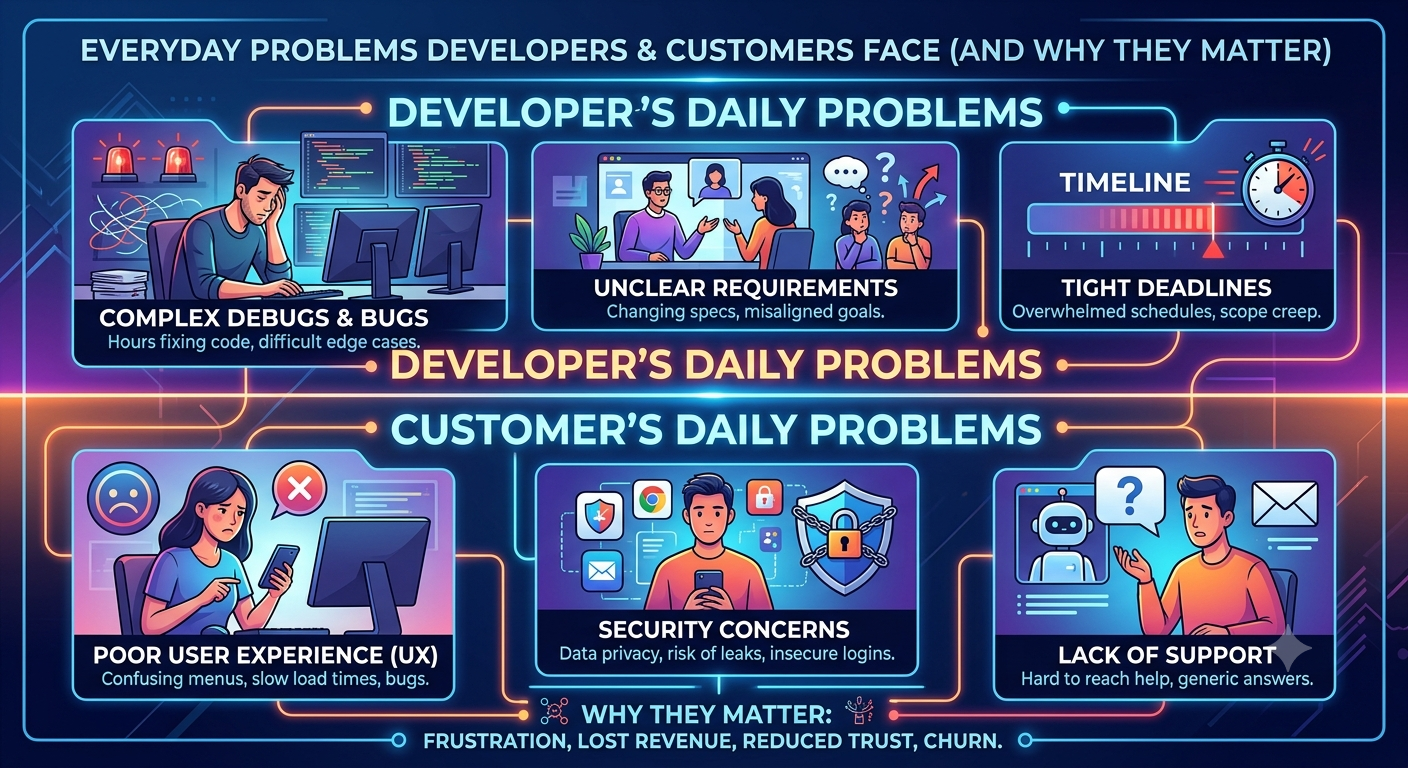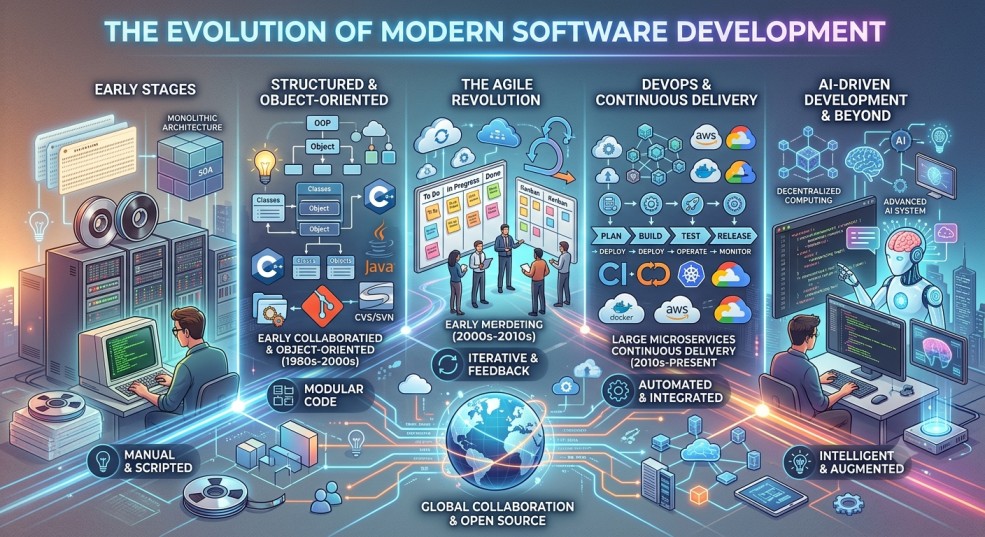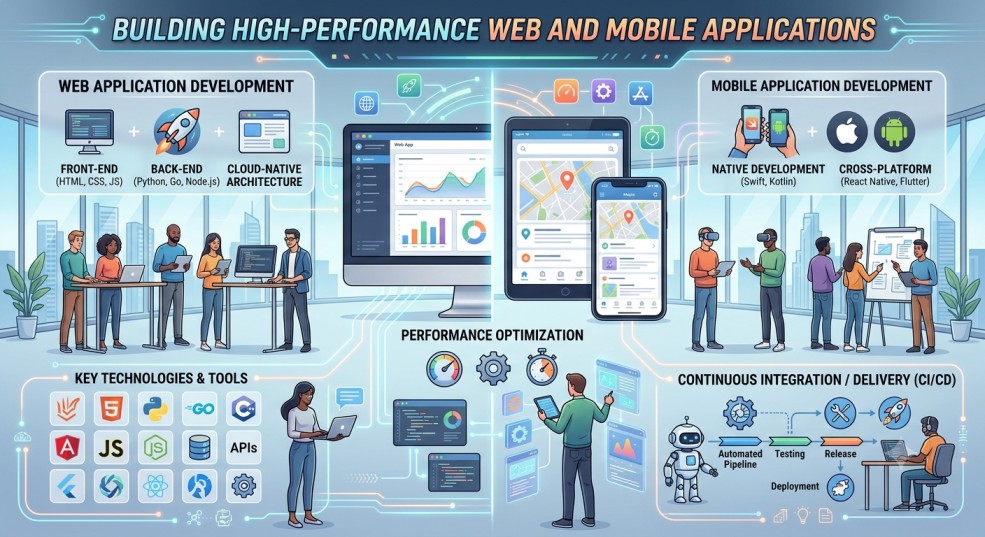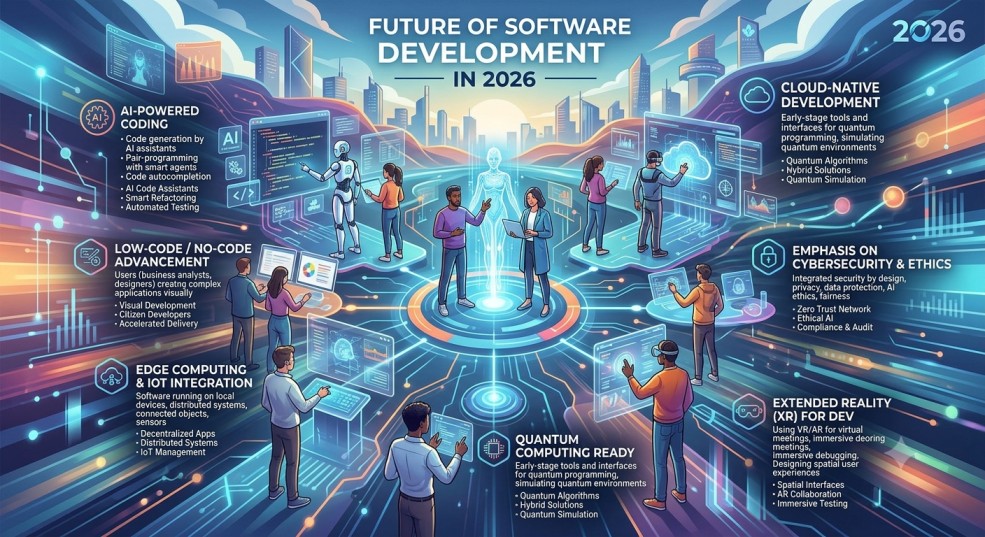
Software development is evolving faster than ever. With the rise of artificial intelligence, cloud computing, and automation, developers are redefining how applications are built and delivered.
Key trends shaping the future:
- AI-powered development tools like GitHub Copilot and ChatGPT
- Low-code & no-code platforms for rapid application building
- Cloud-native architecture using microservices & Kubernetes
- Cybersecurity-first development practices
- Remote & global development teams
The future belongs to developers who continuously learn, adapt, and innovate.
The future of software development in 2025 is defined by an unprecedented fusion of Artificial Intelligence and Cloud-Native principles, fundamentally changing the developer's role and the speed of innovation. This year marks a clear shift from human-centric coding to AI-augmented development, where productivity gains are measured not by individual effort, but by the efficiency of collaboration between developers and intelligent tools.
The most transformative trend is the pervasive integration of Generative AI across the entire Software Development Lifecycle (SDLC). Tools like code assistants are moving beyond simple autocompletion; they are becoming proficient coding agents that can generate complex functions, automate boilerplate creation, and even write unit tests with high accuracy. This allows professional developers to offload repetitive tasks, focusing their expertise on high-level architecture, complex problem-solving, and creative innovation. The efficiency boost is significant, with some organizations reporting substantial productivity gains.
Complementing this is the rise of Low-Code/No-Code (LCNC) platforms, which are becoming universally adopted. Projected to account for a vast majority of new application development by 2026, LCNC platforms democratize software creation, empowering "citizen developers"—non-technical business users—to build crucial internal tools, dashboards, and workflows. This relieves pressure on central IT teams, enabling them to concentrate on core, mission-critical systems. The best LCNC platforms are now integrating Generative AI, allowing users to create apps simply through natural language prompts.
Architecturally, the focus is squarely on Cloud-Native development. Microservices, containerization using Docker, and orchestration via Kubernetes are no longer optional best practices but standard requirements for building applications that need massive scalability and resilience. This model supports rapid, decentralized deployment and is the foundation for adopting advanced DevSecOps practices. In 2025, security is further integrated into the pipeline, with automated vulnerability scanning and real-time threat detection becoming standard (AIOps).
Developers are also embracing modern programming languages, with Rust, Go, and Kotlin gaining significant traction alongside the dominance of Python and JavaScript. These languages are valued for their memory safety, concurrency, and suitability for building distributed, cloud-based systems. Finally, the industry is increasingly prioritizing sustainability in software, with efforts focused on energy-efficient algorithms and green hosting solutions to reduce the computational carbon footprint of applications. The developer of 2025 must be a master of prompt engineering, collaboration, and continuous learning to harness these powerful, fast-evolving tools.