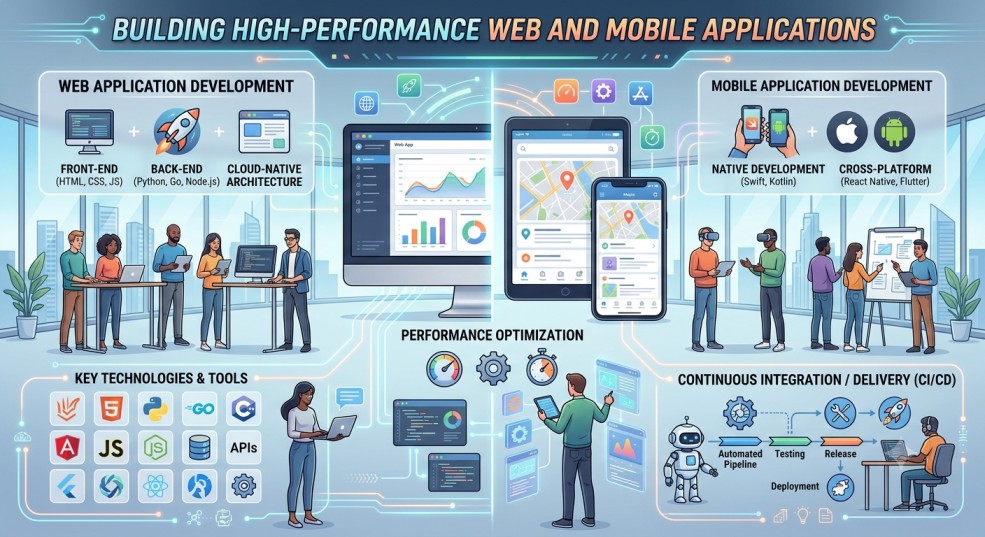
Software development has undergone a dramatic transformation over the past decade, moving away from the cumbersome and often rigid structures of monolithic applications toward highly scalable and modular systems. This paradigm shift is foundational to meeting the demands of today's always-on, high-volume digital environments. Modern development philosophies emphasize speed, flexibility, and maintainability as core tenets. The focus is now on clean architecture principles, ensuring that code is easy to understand, test, and modify. This often involves adopting Domain-Driven Design (DDD) to align software structures with real-world business processes.\n\nReusable components are a critical part of accelerating development cycles. Utilizing mature and robust frameworks is essential; server-side tools like Laravel, Spring Boot, and Django abstract away complexity, while frontend frameworks such as React, Vue, and Angular enable the creation of dynamic, responsive user interfaces. Performance optimization is no longer an afterthought but an integral part of the design process, focusing on efficient algorithms, optimized database queries, and judicious resource management.\n\nMethodologies like Agile and Scrum are now standard operating procedure, providing a structured yet flexible approach to project management. These iterative processes enable teams to deliver value faster, adapt quickly to changing requirements, and ensure continuous feedback loops with stakeholders. This high degree of collaboration is further supported by sophisticated version control systems. Git and platforms like GitHub and GitLab are indispensable, providing robust tools for collaborative code management, branching strategies, and seamless integration.\n\nCrucially, the modern developer must be committed to writing high-quality, testable code. Concepts like Test-Driven Development (TDD) and comprehensive unit, integration, and end-to-end testing are employed to ensure long-term stability and reduce technical debt. The pace of technological change necessitates continuous learning, as new frameworks, languages (like Rust or Go), and tools emerge with increasing frequency. Ultimately, software development today transcends mere coding. It is a comprehensive discipline focused on engineering reliable, highly available, secure, and user-centric solutions that directly address and solve complex, real-world business challenges, driving digital innovation and competitive advantage. The commitment to quality and architectural foresight determines the longevity and success of any modern software product.
The Evolution of Modern Software Development
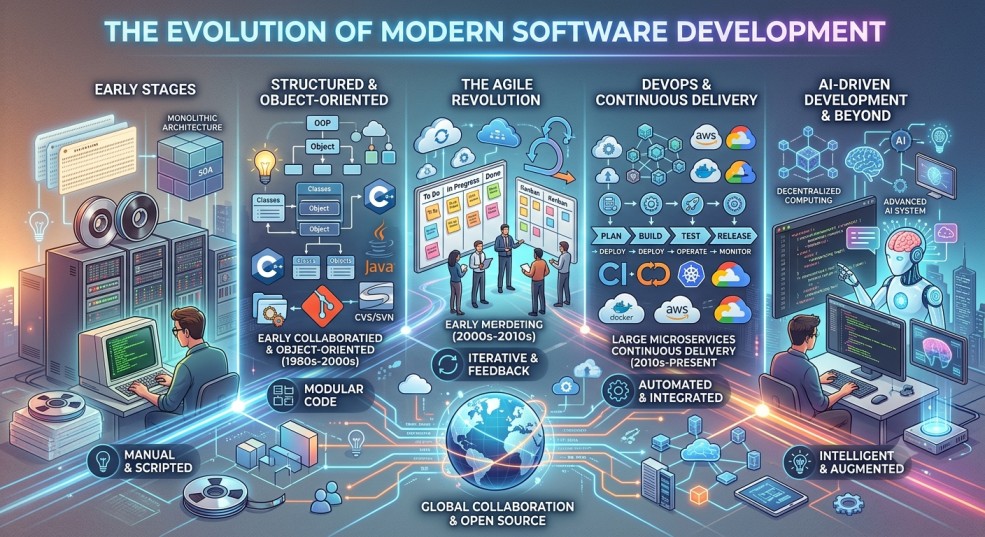
From Monolith to Microservices: The Evolution of Modern Software Explore the shift from rigid monolithic systems to flexible, scalable, and modular software architectures. Learn how Agile, Scrum, and clean code practices drive modern development success.