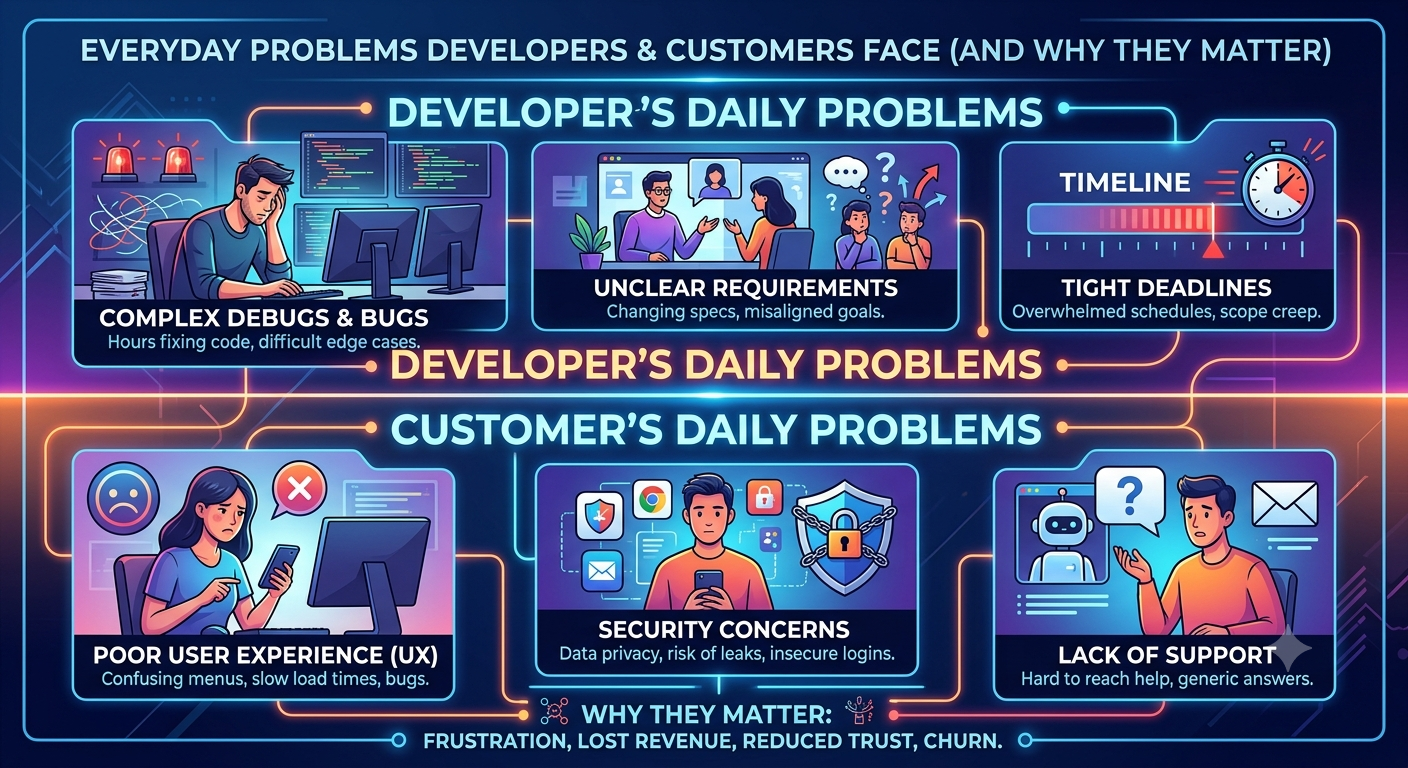
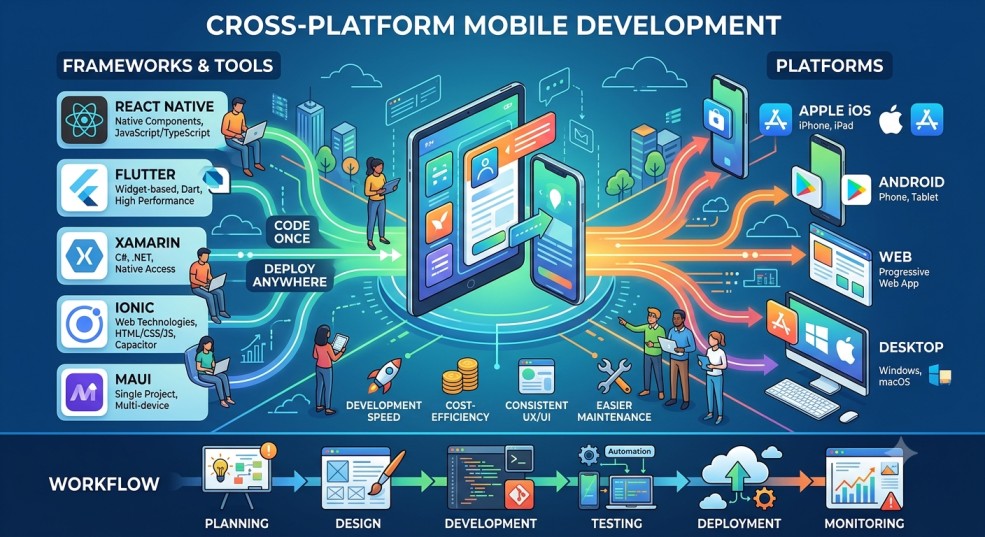
In the contemporary digital ecosystem, web and mobile applications represent the most critical touchpoints between a business and its customer base. Success is increasingly measured not just by functionality, but by the application's speed, responsiveness, and overall user experience (UX). A poor-performing application can lead to high abandonment rates and damage brand trust, making high-performance architecture a fundamental requirement. Modern development has been drastically accelerated and streamlined by powerful cross-platform tools. Frameworks like React, Vue, and Angular dominate web frontend development, allowing for declarative, component-based UIs that load faster and feel more interactive.\n\nFor the mobile space, Flutter and React Native have become game-changers. These technologies allow developers to write a single codebase that can be deployed across both iOS and Android, drastically reducing development time and cost while maintaining near-native quality and performance. This shift toward cross-platform and hybrid solutions, including Progressive Web Apps (PWAs), maximizes reach without sacrificing the user experience typically associated with native applications. PWAs offer reliable performance, offline capabilities, and a streamlined installation process, bridging the gap between web and mobile.\n\nCentral to this architecture is the API-driven approach. A well-designed, RESTful or GraphQL API acts as a secure, high-speed conduit, ensuring seamless, decoupled integration between the frontend interface and the backend systems (microservices, databases, and third-party services). This decoupling is essential for scalability, allowing independent scaling of different system components based on traffic patterns.\n\nBeyond speed, modern applications must meet standard expectations for security, accessibility, and robust scalability. Comprehensive security protocols, including robust authentication and data encryption, are integrated from the project's inception. Adherence to accessibility standards (like WCAG) ensures that the application is usable by all. Ultimately, a high-performance, well-designed web or mobile application is a powerful strategic asset. It not only engages users and increases retention but also forms the backbone of digital operations, enabling businesses to achieve sustainable growth and maintain a competitive edge in an increasingly mobile-first world.
Building High-Performance Web and Mobile Applications
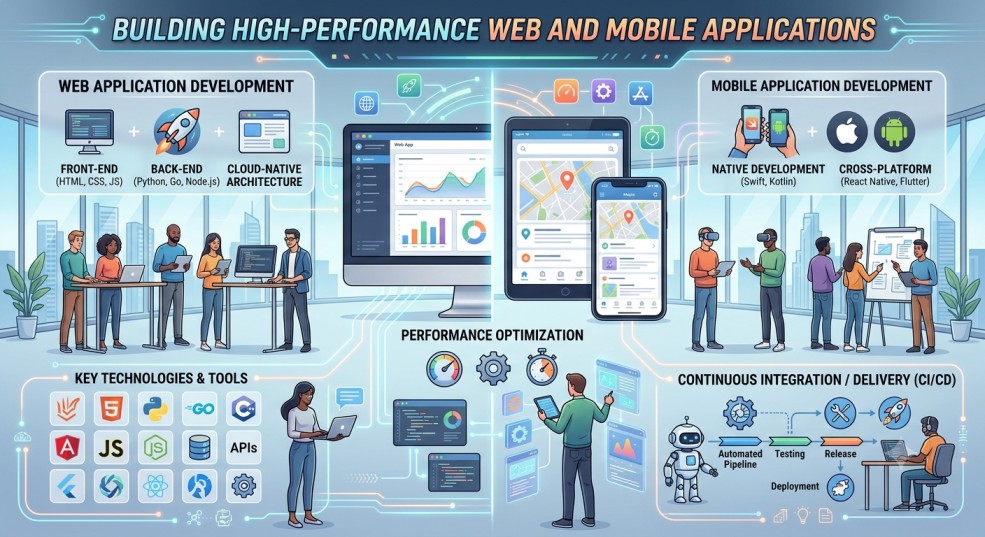
Speed & UX: Building High-Performance Web and Mobile Apps Performance, responsiveness, and user experience are non-negotiable for digital success. Discover how tools like React Native, Flutter, and API-driven design deliver world-class applications.