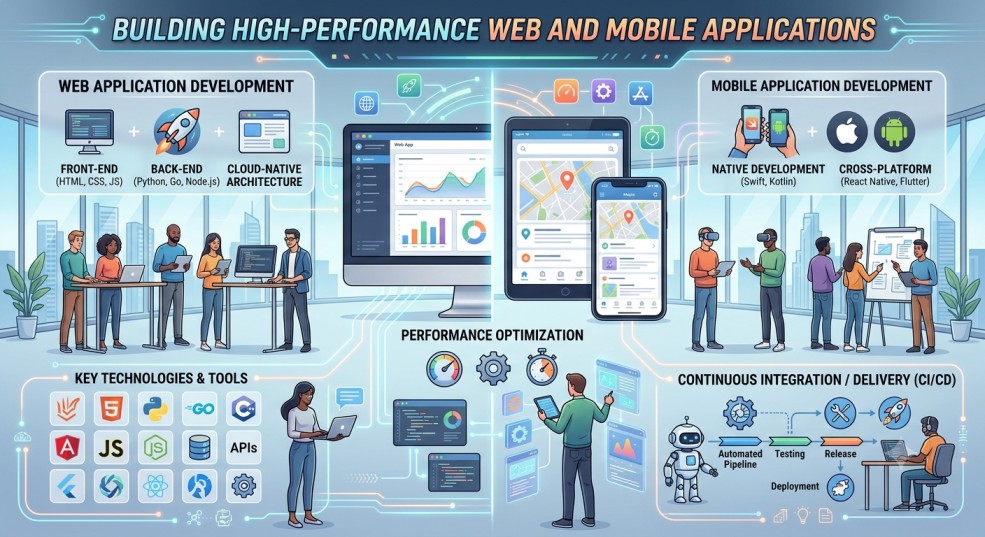
In the highly competitive mobile application market, reaching the widest possible audience on both iOS and Android platforms is critical for success. Traditionally, this meant developing two separate, native applications using distinct programming languages (Swift/Objective-C for iOS and Kotlin/Java for Android) and entirely different development teams or resources. This dual-development approach often led to increased costs, longer development cycles, and inconsistencies in user experience or feature sets across platforms. Cross-Platform Mobile Development emerged as a revolutionary solution to these challenges, fundamentally changing how businesses approach mobile app creation.
The core benefit of cross-platform development lies in its ability to write a single codebase that can be compiled and deployed to multiple mobile operating systems. This significant advantage reduces development time, effort, and cost by eliminating the need to maintain two separate codebases. This efficiency gain allows businesses to bring their applications to market faster and allocate resources more strategically, focusing on innovation and feature enhancements rather than duplicate efforts.
Leading the charge in this space are powerful frameworks such as Flutter (by Google) and React Native (by Facebook). Flutter, known for its "widget-based" UI and impressive performance, allows developers to build visually stunning, highly customized applications that deliver a near-native user experience. React Native, leveraging JavaScript, enables web developers to transition seamlessly into mobile development, offering a vast ecosystem of libraries and a strong community support. Other frameworks like Xamarin and Ionic also contribute to the diverse landscape of cross-platform tools.
Beyond cost and time savings, cross-platform development fosters greater consistency in branding and user interface across devices, ensuring a unified user experience. It also simplifies future maintenance and updates, as changes made to the single codebase are reflected across both platforms. While native development still offers the ultimate in platform-specific optimization, cross-platform solutions have matured significantly, now providing excellent performance, access to native device features, and a compelling development experience. For many businesses, particularly those prioritizing broad reach, rapid deployment, and efficient resource utilization, cross-platform mobile development is the strategic choice, offering a powerful balance between performance, functionality, and economic viability.
Cross-Platform Mobile Development
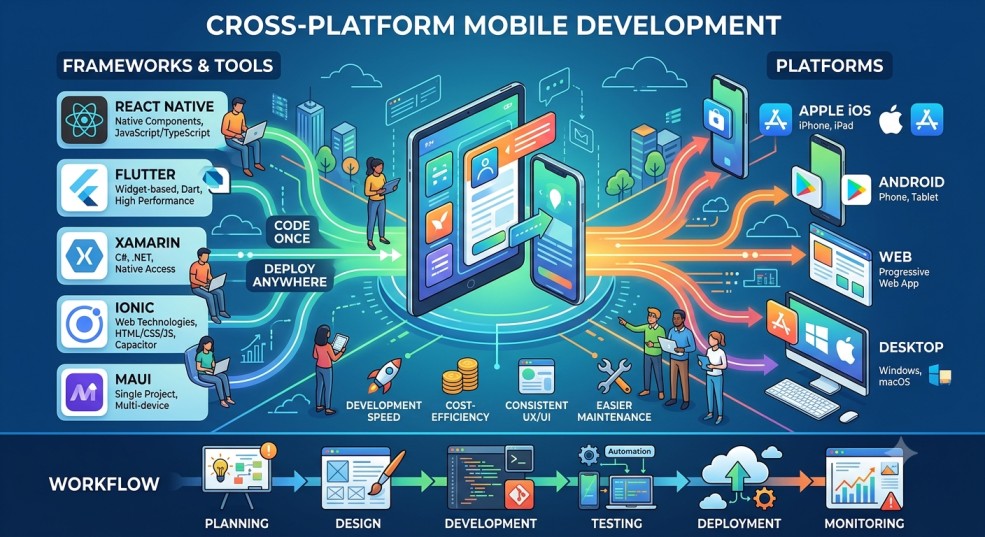
One Codebase, All Devices: The Power of Cross-Platform Mobile Development Maximize reach and efficiency with cross-platform mobile development. Explore how frameworks like Flutter and React Native empower businesses to build robust apps for iOS and Android simultaneously.